
Articles
How Swiss Is Your Swiss Watch? The 60% Rule Explained
Nov
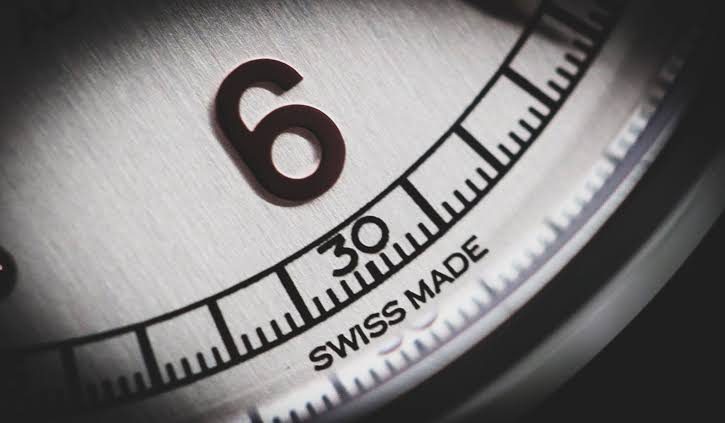
There are two words at the bottom of almost every luxury dial, printed so small you need good light to read them: SWISS MADE. They are the two most expensive words in the industry. They are the reason one watch costs fifteen thousand dollars and a near-identical one costs fifteen hundred.
Here is the question nobody in a boutique will answer honestly: when those two words are stamped on the dial, how many of the little parts behind that dial — the gears, the springs, the screws you will never see — were actually made in China? With most brands, the honest answer is “more than you think, and legally, that’s fine.” With Rolex, the answer is “supposedly none.” So either Rolex is the last brand that’s truly all-Swiss, or it’s playing the same 60% game as everyone else and the law lets it stay quiet about it.
Let’s look at what the label actually promises, which brands have already admitted the truth, and why “pure Swiss” might be the best marketing trick in the business.
What “Swiss Made” actually guarantees (less than you think)
The rules were tightened on 1 January 2017, after the industry itself admitted the old version was too soft. Per the Federation of the Swiss Watch Industry FH, a watch can wear “Swiss Made” only if it contains at least 60% Swiss value, uses a Swiss movement (itself 60% Swiss value, up from 50%), and is cased-up and inspected in Switzerland.
Read that carefully, because the trick is in one word: value. The 60% rule is a cost test, not a parts test. It measures where the money was spent — including expensive Swiss labor, research, and certification — not how many physical components came from Switzerland.
That distinction changes everything. Swiss assembly, R&D, and certification are costly. So a watch can be filled with inexpensive Chinese-made gears, springs, cases, and bracelets and still clear the 60%-value line, purely because the Swiss labor around those parts is expensive. In plain terms: the share of actual physical parts from China can sit well above 40% — and the watch still legally reads “Swiss Made.” The law counts francs, not parts. Nobody is breaking a rule. The rule was simply written with a door in it.
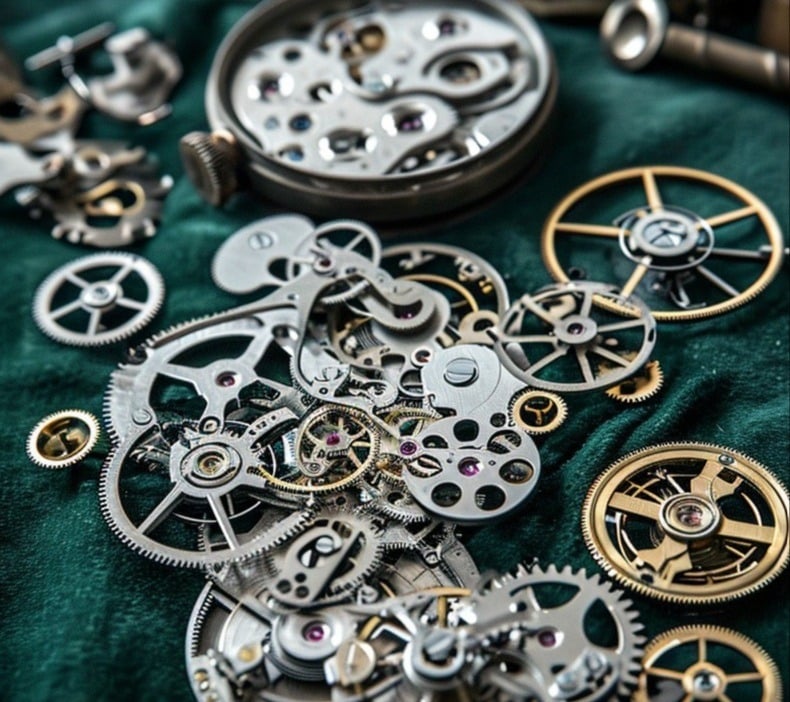
Loose components before assembly — any of these can be foreign.
The Watch Made of Cheese, Built to Prove a Point
You do not have to take a replica seller’s word for this. Take it from inside Switzerland.
Moser & Cie., a respected independent Swiss house, got so fed up with the label that in 2017 it built a watch with a case made partly of real Vacherin Mont d’Or cheese and called it the “Swiss Mad” watch. Its CEO, Edouard Meylan, called the Swiss Made label “lax and meaningless” and said it “gives credibility to the worst abuses in our industry.” Moser then stopped putting “Swiss Made” on its watches altogether, pointing out that over 95% of its own components are genuinely Swiss — far beyond what the law demands. When a proudly Swiss brand refuses the label because it’s too easy to earn, that tells you what the label is worth.
Then there’s the open secret of the movement trade. Swiss finishing houses have been documented taking Chinese ébauches (rough movements) from makers like Sea-Gull, finishing them in Switzerland, and selling them as legally “Swiss Made” calibres. The base is Chinese. The finishing is Swiss. The label is Swiss. All legal.
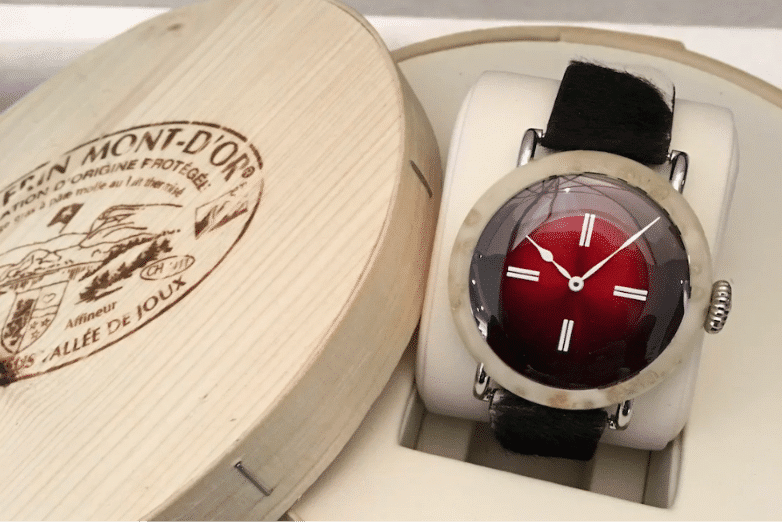
The Moser “Swiss Mad” watch, its case made partly of Vacherin Mont d’Or cheese. Photo: H. Moser & Cie.
Chinese Movements Have Caught Up
For twenty years “made in China” was an insult in watchmaking. That reputation is now out of date, and this matters for the whole argument.
Tianjin Sea-Gull has produced mechanical movements since 1955. Peacock, founded in the 1950s, builds around 1.5 million movements a year — good enough that European brands quietly build watches around them, and that the Franco-Chinese brand Atelier Wen markets Chinese movements as a point of pride.
How good? A watch-industry editor ran a blind test. He bought three Chinese watches on Amazon for about $130 each, hid the movements, and handed them to seasoned collectors, dealers, watch journalists, and several executives from Swiss watch brands — none told where the watches came from. Their price guesses ran from $3,500 to $9,000, and one Swiss executive valued a single piece at nearly $25,000 on quality alone.
These were $130 watches. The people who sell “Swiss Made” for a living couldn’t feel the difference. So when a brand puts a few Chinese gears inside a strong, well-built case, the result isn’t a worse watch — it’s a cheaper watch that performs the same. The Chinese parts were never the problem. The price tag was.
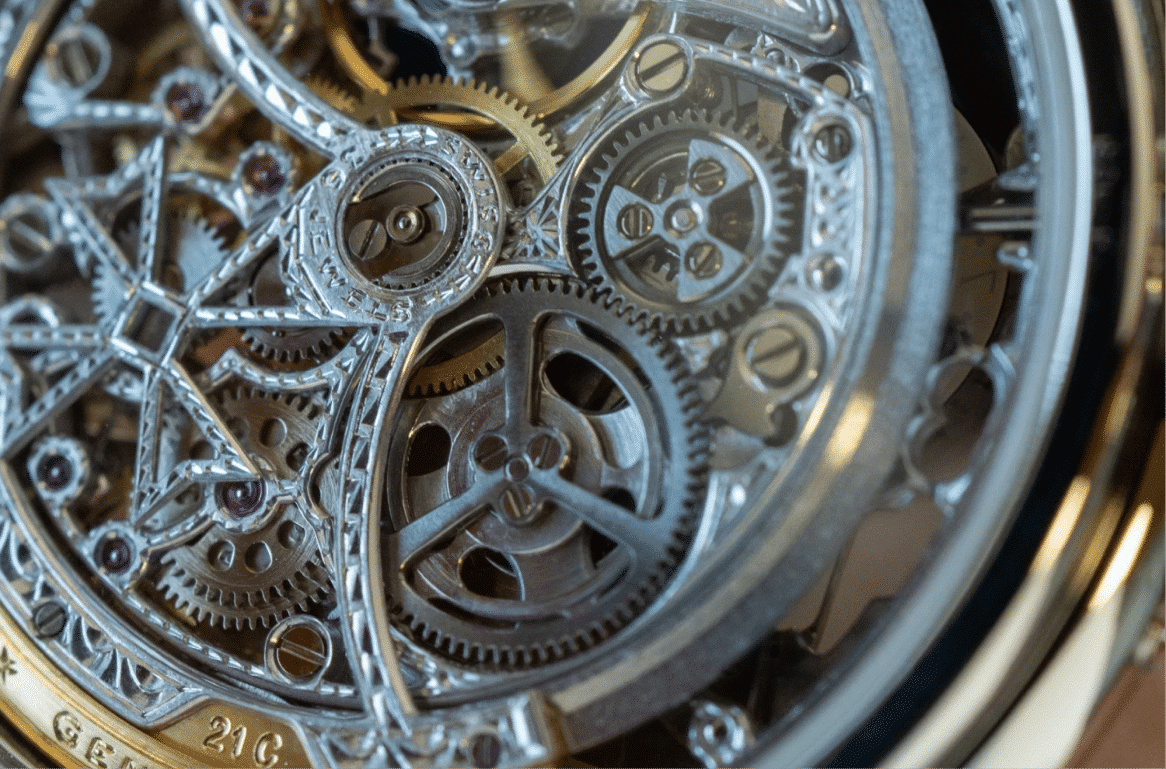
Beautiful, Swiss-looking — and impossible to source-check by eye.
So where does Rolex actually stand?
Rolex says everything is made by Rolex, in Switzerland — its own gold, its own cases, its own movements. It’s a powerful story. It’s also one you cannot check.
Rolex is one of the most secretive companies in the world. It’s owned by a private foundation, publishes no financial results, no supplier list, and no part-by-part origin audit. No caseback says “17% of these components came from Asia.” And under Swiss law, it doesn’t have to. The same 60% rule that lets other brands quietly use foreign parts also lets every brand — Rolex included — stay silent about where each screw, spring and gear was made.
So we’re not claiming Rolex uses Chinese parts. We’re pointing out that if it did, the law wouldn’t require you to be told. “All Swiss, all Rolex” isn’t a verified fact. It’s a marketing promise, protected by the same rules everyone else hides behind.
When you pay the Swiss premium, are you buying verified Swiss parts — or a story you have no way to check?
The marketing line nobody will ever print
Think about what you will never see. No brand will ever stamp “40% Chinese parts” on a dial. None will print “35% of this movement’s components were sourced in Asia” in the catalogue. None will admit “20% foreign, 60% Swiss value, assembled here.” It is always just the clean, confident, two-word promise: Swiss Made.
And that promise can legally mean a watch that is substantially foreign by parts — or, as Rolex claims, one that is entirely Swiss. From the outside, on the wrist, in the boutique light, you cannot tell which. That is the entire business model. “Pure Swiss” is not a measurement you can verify. It is a feeling you are sold. Sometimes it’s completely true. Sometimes it’s 60% francs and a lot of faith. The label looks identical either way.
What this means for your money
Line the facts up and the picture is clear:
- “Swiss Made” is a value test, so the physical-parts share from China can run higher than most buyers imagine.
- Chinese components are now good enough to fool the people who sell Swiss watches for a living.
- No brand — not even Rolex — hands you a verifiable origin breakdown. You’re paying for a story as much as a spec.
The takeaway isn’t that Swiss watchmaking is worthless. The best of it is extraordinary. The takeaway is narrower: a huge part of a luxury watch’s price is the label and the faith behind it, not a wall of quality you could actually detect by wearing it.
That is the exact logic of the modern super clone. A high-grade super clone Rolex uses a Swiss-style automatic movement, 904L-grade steel, a sapphire crystal, and a Cerachrom-style ceramic bezel — the same materials the whole industry is quietly working with — without the five-figure faith tax. We explain why the gap vanishes at arm’s length in our guide to Rolex imperfections , and we lay out the full money argument in Authorized vs Replica Rolex . Even WIRED found that Rolex’s own boutique didn’t catch the super clones they brought in .
If “pure Swiss” can’t be verified and the experts can’t feel the difference, the only real question left is how much of that price is the watch — and how much is the word.
Frequently asked questions
Does “Swiss Made” mean all the parts are made in Switzerland?
No. The Swiss made ordinance (in force since 1 January 2017) requires at least 60% Swiss value — a cost test, not a parts count. Because Swiss labour and certification are expensive, the share of physical parts sourced abroad can be higher than 40% while the watch still qualifies.
Which Swiss watches use Chinese parts?
Brands rarely disclose it, but it’s documented that Swiss finishing houses take Chinese ébauches (from makers like Sea-Gull) and finish them into “Swiss Made” movements. Even Swiss brands admit the system is loose — H. Moser & Cie. publicly called the label “meaningless” and dropped it. Highly integrated brands like Rolex are the exception and claim near-total in-house Swiss production.
Is Rolex really all Swiss?
Rolex says so — but no one can verify it. Rolex publishes no supplier list and no part-by-part origin audit, and Swiss law doesn’t require it to. The same 60% rule that lets other brands quietly use foreign parts also lets Rolex keep its supply chain private. “All Swiss” is a promise, not a proven fact.
Are Chinese watch parts bad quality?
Not anymore. Chinese makers like Sea-Gull (movements since 1955) and Peacock (around 1.5 million movements a year) produce reliable mechanical movements at scale. In blind tests, experienced collectors and Swiss brand executives have valued inexpensive Chinese watches at thousands of dollars.
So what am I paying for with a luxury watch?
Partly real craftsmanship, and partly the brand, the marketing, and the “Swiss Made” story. The label guarantees a 60% cost threshold — not that the premium reflects quality you could detect on the wrist.
The verdict: the last holdout, or the last untouchable?
“Swiss Made” is the most powerful phrase in luxury, and it does exactly what it was built to do – carry a price. Stripped to the law, it promises 60% Swiss value and nothing more. Most of the industry lives inside that margin. One proud Swiss brand got so disgusted it switched to cheese. And Rolex stands apart, insisting everything is in-house — a claim no auditor, no journalist, no customer has ever been allowed to verify. Ask for the supplier list and the doors close. Nobody has ever checked, because Rolex does not have to.
So is Rolex clean? Unknown. Unknowable. The only brand in the room that refuses to be measured is the one selling you the measurement.
Rolex Expert is not affiliated with Rolex SA. This article is for informational purposes.